





January/February
Dia de los Reyes Magos (Day of The Three Wise Men) - January 6th
This is a big day all over the island and Epiphany is celebrated with street parades in most cities. The Three Wise Men come to town on the evening of January 5th, where they give out sweets to children.
Fiesta del Almendro en Flor (Festival of the Almond in Blossom)
This fiesta takes places in early February when the almond trees are in bloom. Celebrated on a grand scale in the towns of Tejeda and Valsequillo, this festival also gives people the chance to taste local produce, such as almond wines and sweets, and to enjoy traditional folk dancing and singing.
February/March
Carnival around the island
In Gran Canaria, carnival is celebrated in almost every corner of the island and if you want to experience the most famous and exuberant, make your way to Las Palmas, San Bartolomé, Maspalomas, Agüimes, Agaete or Telde, each of these towns’ carnival festivities having their own trademark. Dressing up in colourful costumes, dancing and singing are mainly what carnival is all about. Some people love carnival so much they travel around the island to follow the festivities – there is always a great party atmosphere and much to see.
Enjoy the fantastic shows that include extensive programmes, generally starting with an opening speech (pregón), full of humour and irony. Then, during the weeks leading to the climax of the last carnival weekend – before Ash Wednesday – there are competitions for the ‘murgas’ (typical carnival bands who sing satirical and funny songs), ‘comparsas’ (Brazilian-like carnival dancers) and music groups mixed with many other events like drag queen competitions, comedy shows and much more.
Carnival officially ends with the beginning of Lent on Ash Wednesday, but this is Gran Canaria so head down to Playa del Inglés where the party continues with another weekend of processions and parties held mainly around the Yumbo Centrum.
March/April
Holy Week
During the Semana Santa – the week before Easter – you will be able to see solemn pre-Easter processions, where sacred icons and religious statues are carried through the streets of many villages and towns throughout the island.
April/May
Rally Islas Canarias Trofeo El Corte Inglés
This is Gran Canaria’s biggest car rally. Attracting many international competitors, its stages include Ingenio to Tejeda, Artenara to Valleseco and Telde to Ayacata.
Fiesta de los Aborígenes – April 29th
This feast day marks the final uprising of the Guanches against the Spaniards and the annexation of Gran Canaria by the Crown of Castile in 1483. There are big ceremonies taking place at Fortaleza Grande near Santa Lucía, as well as music and dancing events.
Fiestas del Queso – April 27th – May 4th
The small town of Santa María de Guía celebrates the making of its famous cheese with traditional music and dancing, along with plenty of cheese-eating.
Día de Canarias (Canary Islands’ Day) – May 30th
This is the official holiday for all the Canary Islands. There are celebrations in every corner, including concerts, the traditional Canarian wrestling, folk groups and more, mainly focusing on tradition.
Late May/early June
Corpus Christi
As an act of respect and religious devotion, streets and squares are decorated with beautiful carpets of flowers and in some areas dyed salt is used - a truly impressive display to create a colourful path for the processions. Las Palmas is usually the place to go for the best flower decorations in gran Canaria; a good starting point to visit many other towns and villages for a true feast of colour!
July
Fiesta del Carmen – July 16th
The Virgen del Carmen is the patron saint of fishermen, that’s why this celebration is so important in all the Canary Islands. This is especially so in Barrio de la Isleta, Las Palmas, Arguineguín and Puerto Mogán where this festivity can last up to one week and statues of the Virgin are taken out to sea in processions of decorated boats.
August
Bajada de la Rama (Bringing down the Branches) – August 4th
This colourful fiesta, one of the oldest on the island, has its roots in the Guanches’ rain dance and is held in Agaete. Nowadays, villagers carry pine branches from Agaete down to a chapel dedicated to the Virgen de Las Nieves. In the old times the aborigines would thrash the ocean waters with the branches to bring the rain in.
September
Fiesta de la Virgen del Pino – September 8th
Every year, the Fiesta de la Virgen del Pino (Feast of Our Lady of the Pines) is celebrated and numerous pilgrims from all over the island come to Teror to pay reverence to the saint. This feast is not only the biggest event in the region – it is also the most important religious festival on the island’s calendar and the celebrations usually go on for one week.
Fiesta del Charco (Festival of the Lagoon) – September 11th
The origins of this fiesta hark back to an aboriginal past. It is held in Puerto de la Aldea, a municipality of San Nicolás de Tolentino. Traditional rituals include villagers wading fully dressed in the lagoon, trying to catch fish with their bare hands and splashing each other with water.
October
Fiestas de la Naval (Festival of the Sea) – October (2nd Saturday of the month)
Maritime processions in Las Palmas and other ports commemorate the victory of the Spanish Armada over the British explorer Sir Francis Drake in 1595.
December
Día de Santa Lucía – December 13th
This winter festival combines Swedish and Canarian traditions and is principally celebrated in Santa Lucía de Tirajana in the southwest of the island.
Navidad – December 25th
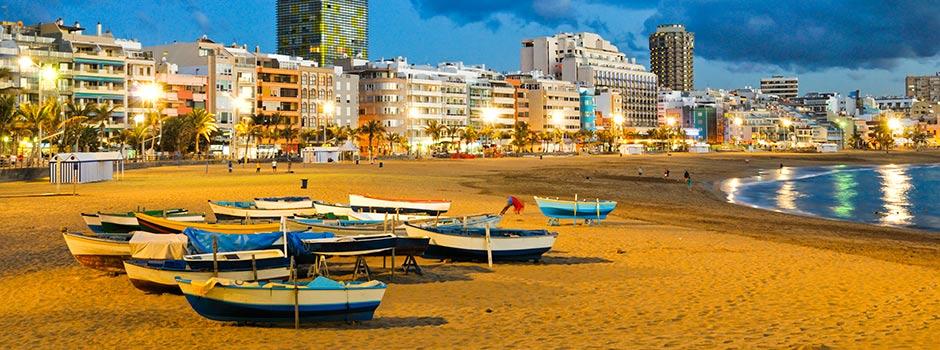
There are many traditions to be enjoyed and discovered during Christmas time in Gran Canaria and the nativities play an important role. The village of Veneguera (near Mogán) provides the stage for a popular nativity play on Christmas evening. Playa de las Canteras also organises a very different tradition with Nativity-related sand sculptures. Many international artists are invited and the results are truly spectacular.
New Year celebrations (Nochevieja) – December 31st
The New Year celebrations (Nochevieja) – usually start with dinner at a restaurant (book in advance, this is a big night) and plenty of fun, music and dancing. Make sure you get your lucky grapes! It is said you’ll be lucky in the next year if you eat 12 grapes at midnight, one per stroke of the clock.