







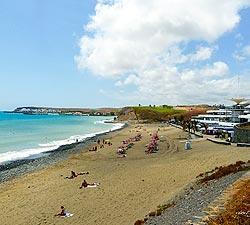
















The main bulk of the Canarian economy centres on the tourism industry, accounting for up to 80 per cent of the gross income of the archipelago. With one of the most favourable climates in the world, the Canary Islands attract millions of tourists every year. Besides that, locals rely on the banana industry, other agricultural exports and new tourism-related service industries to make a living.
In the centuries following the Spanish conquest, the mainstays of the Canarian economy were the sugar and winemaking industries. Sugar production on the islands started right after the conquest with sugar-cane imported from Madeira, but it declined in the middle of the 16th century. This was due to the strong competition from Brazil and the Caribbean, which could produce sugar much cheaper. The winemaking industry, which enjoyed its peak during the 16th century, collapsed at the beginning of the 18th century due to a locust plague and mildew attacks, which destroyed the vineyards. However, it has since been revived, with the wines of Gran Canaria, Lanzarote, La Palma and Tenerife proving increasingly popular.
From about 1830 to 1870, as the demand for carmine food dye grew, cochineal production boomed throughout the islands - promising a better future, particularly for the poorer population. Yet this dream did not last very long. The development of synthetic dyes had a considerable impact, causing the decline of the cochineal industry.
However, the archipelago’s economy was saved around 1850 with the introduction of the industrial cultivation of bananas to the islands. Growing the fruit gradually gained in importance and bananas became the islands’ main export product, reaching its peak at the start of the 20th century. Yet again, there was strong competition surrounding foreign exports, this time from Latin American countries. Surviving on exporting bananas alone was hopeless and local farmers were forced to diversify by cultivating tomatoes, potatoes, other vegetables and exotic fruits.
Today, bananas sold on the Spanish market are protected against foreign suppliers, but their cultivation has become unprofitable due to higher costs and water shortage. Tomatoes are grown on a large scale, mainly for exports between November and April. In recent years the cultivation of flowers and plants for export has also developed into a flourishing industry.
